Image


BOOK NOW
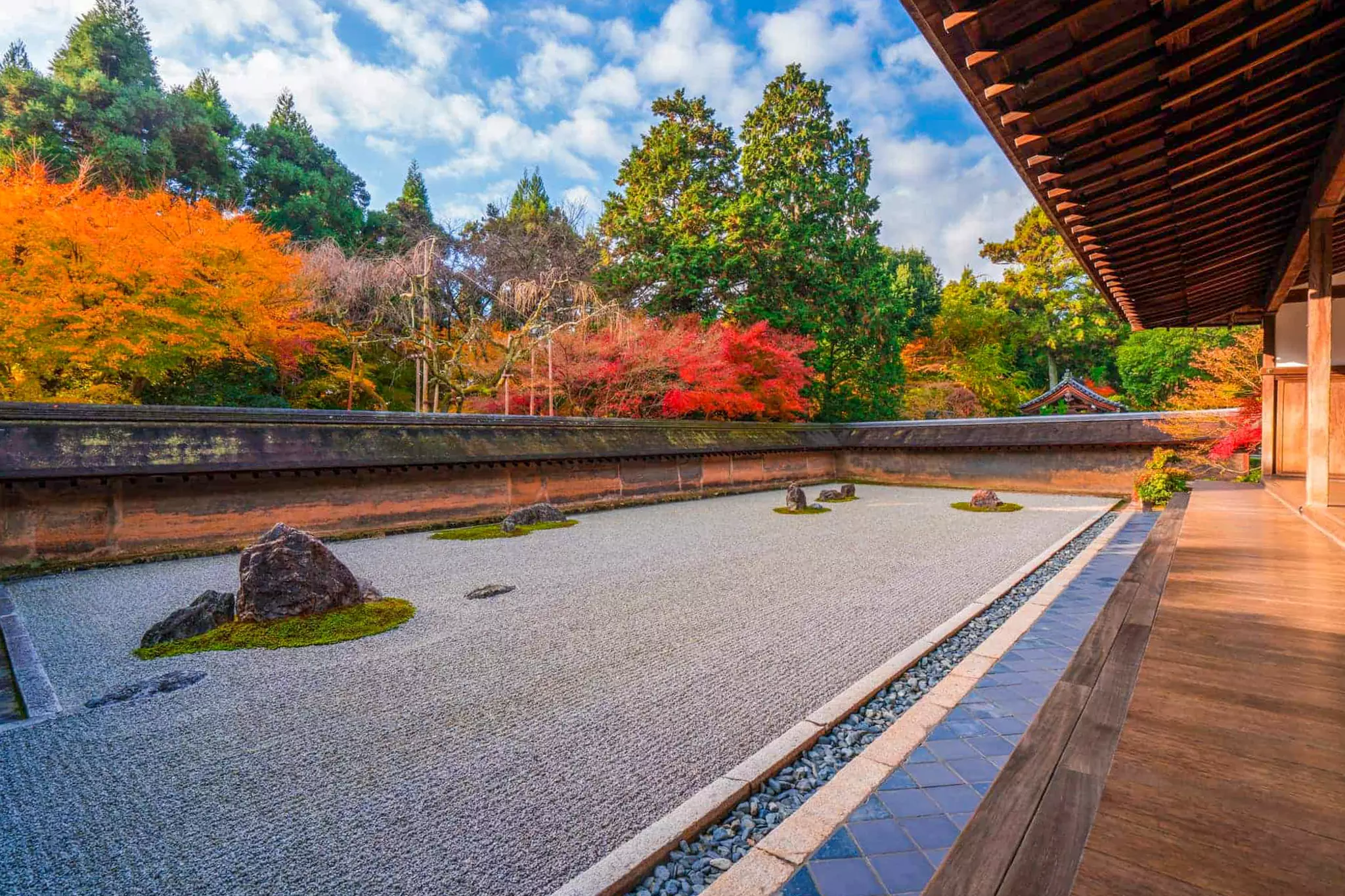
The Zen gardens of Kyoto encourage meditation through the beauty of simplicity and balance amidst a nature-led space. In a karesansui, also known as a dry landscape garden, rocks take the place of islands and mountains, as patterns raked into the gravel suggest water flowing around them.
These compositions rarely have a single meaning. Their limited palette removes visual distraction, repeated lines in the gravel draw the gaze into a steady rhythm, and asymmetrical stone arrangements make you stop and ponder. You are encouraged to look slowly rather than search for a quick answer - the quintessence of the art of meditation in Kyoto that requires no formal practice.
The best Zen gardens in Kyoto reflect different sides of the tradition. Ryōan-ji is known for its enigmatic rock composition, Saihō-ji for its moss-covered landscape, and travellers are drawn to Tenryū-ji for its reflective pond and Taizō-in for the contrast between dry and living gardens.
Ryōan-ji is home to Kyoto’s most renowned karesansui: 15 stones arranged across a bed of raked white gravel. The arrangement holds an intriguing mystery: wherever you sit along the viewing veranda, at least one of the 15 stones remains hidden from sight.
The origin of the garden, as well as its true representation, remain unknown. Rather than looking for a fixed explanation, take a seat and let its ambiguity hold your attention. Many travellers crowned Ryōan-ji as the best Zen garden in Kyoto for experiencing the beauty of restraint.
Known as Koke-dera, or the Moss Temple, Saihō-ji holds more than 120 varieties of moss within its two-tiered garden. The lower level showcases a remarkable sight, where visitors can trace a pond shaped like the Japanese character for “heart”. An early Zen rock garden can be found on the upper level, which is associated with monk and garden designer Musō Soseki.
Soft light filters through the trees and naturally forms shifting shades of green, forging a setting that feels removed from the city. Entry requires an advance reservation, so this is one garden to plan ahead for.
Tenryū-ji’s 14th-century Sōgenchi Garden centres on a broad pond bordered by thoughtfully placed rocks. The Arashiyama hills appear to continue the landscape beyond the temple grounds, demonstrating the Japanese technique of shakkei, or borrowed scenery.
The reflections constantly change with the weather and light, so the garden never looks entirely still even when you are. Its open perspective makes it especially memorable during Kyoto’s spring blossoms and autumn colour. Among the most well-known Zen gardens, Tenryū-ji encapsulates a rare sense of continuity; although the temple buildings were repeatedly lost to fire throughout history, Sōgenchi Garden has largely preserved its original form.
Taizō-in rewards visitors with both a historic dry landscape by painter Kanō Motonobu and Yoko-en - a pond garden designed for a contemplative stroll. One asks you to sit within stone and empty space, whereas the other guides you past greenery and flowing water.
Near the washbasin, pause to hear the suikinkutsu, or Japanese water harp. Droplets fall into a hollow ceramic vessel buried beneath the ground, producing a delicate echo that resembles distant bells. Its sound transforms an easily overlooked corner of Taizō-in into one of the garden’s most memorable details.
Proper planning helps preserve the ambience of Kyoto’s meditation gardens and gives you more time to appreciate them.

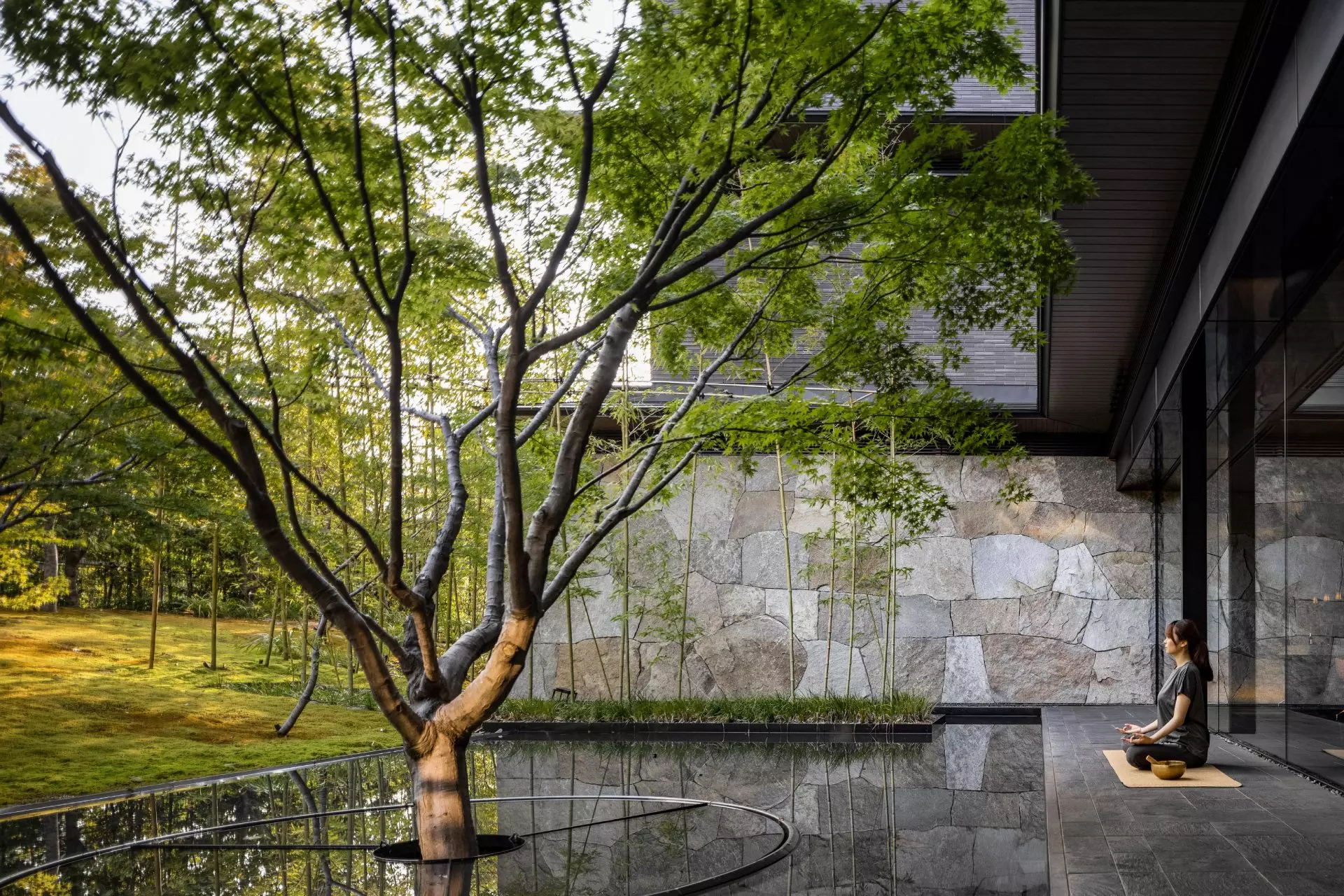
The peace of Kyoto’s gardens continues in the place you return to. Garrya Nijo Castle Kyoto conveys that sense of calm through its minimalist spaces, with a serene Kyoto hotel room promising time to rest after a day venturing around the city.
As daylight fades, the Kyoto sunset ritual carries this stillness into the evening. Guests arrange repurposed flowers beside the Japanese garden basin, then watch candlelight soften the surroundings as the city settles into dusk. Curated Kyoto hotel offers leave more time to explore the city, allowing its understated charm to elevate your getaway.

